Posts

In-situ simulation: The Holy Grail or just another distraction?
Image
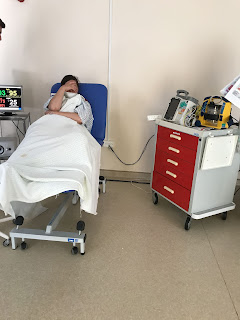
Over the last fifteen years there has been a shift from only delivering simulation sessions in a designated simulation area to more simulation being delivered in clinical areas in so called in-situ simulations. Clearly in-situ simulation offers the ability to increase simulation capacity and become more inclusive, but sometimes it is claimed to be the optimal place to deliver simulation - it may offer lots of benefits but it isn’t without some degree of risk. Benefits - the ability to simulate in the participants clinical area, with their clinical equipment and their team has clear benefits and we know that all to often staff sent for simulation in a dedicated area, will be cherry picked and will not be representative of the skill mix in the real environment. Also, as it is the real working area, it also enables detection of those ergonomic issues (or latent issues) i.e. when people coming from different areas can’t find the location, equipment isn’t available etc. Worklo...

Ergonomics - time to do my VDU risk assessment again!

Image
In this weeks blog I want to really discuss Ergonomics and start to think about how this is understood, or not, in healthcare.  My interest in this area started years ago - delivering simulation I started to get invited, or invite myself, to a variety of trust (organisational) meetings focussing on a number of quality improvement areas. Topics that have probably been procrastinated on around the world in healthcare organisations such as   patients slips and falls how to spot the deteriorating patient  rates of infection in central lines and urethral catheters ….etc  What I realised over a period of time was that I was having very similar conversations with each disparate group i.e. whilst we focussed on very specific clinical elements there was some unseen presence in the shadows that was not recognised - maybe this entity offered a solution across the range of clinical issues and maybe even a solution to issues we were not looking at!   Initially ...

“So where do we start with simulation in our department?”

Image
When you discuss starting a simulation programme with individuals in a department (or ward etc) there is often a point where the opportunities of simulation almost become overwhelming. There are so many potential simulation areas that could be addressed that often people are unsure where to start.   Over a period of time I have developed a mental model on how to engage and develop a departmental simulation programme in a step wise approach within a department or area. It also works at an organisational level though this blog concentrates on the department level.  The first thing is to realise that all the different groups need to be engaged with the simulation; there is no point in having one professional group, leading and mandating others attend - as there is a risk that it will be seen as the group needs these people as “props” for their own training - the other people will feel that they will not get anything from the sessions. It is important that all the group...

“And he has just had some antibiotics…..” - epidemiology in healthcare simulations

Image
This week I wanted to carry on with the simulation theme and consider the diseases and conditions we often simulate.  If we start to describe our simulation scenario our participants will often second guess our scenarios - often correctly, just think of the common introductions  The patient has just been given antibiotics [ anaphylaxis ]  The patient has just returned from theatres [ massive haemorrhage ]…… and so the list continues.  Of course the interesting thing to realise is that in our hospitals countless patients have antibiotics each day without anaphylaxis and the majority of patients return from theatres and make uneventful recoveries. In fact the recent 6th National Audit Project of the Royal College of Anaesthetists looking at perioperative anaphylaxis  ( NAP 6 )  found out of three million patients there was a 1:10,000 occurrence of anaphylaxis compared to a probable 1:1 occurrence in simulation population following ...

"Now you ask, she does look like she is in pain" - Manikins vs SP's

Image
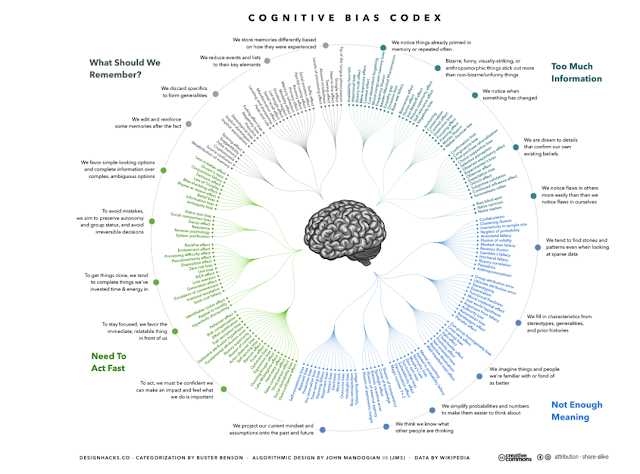
Thanks again to all those people who have commented and helped my blogs to evolve. The conversations around human bias, its predictability and also a tangent looking at bias in AI were fascinating. This week I want to move back to a simulation focus - really so I can get to the stage of linking the themes together. I am going to focus on the benefits and challenges of working with Simulated Persons and what that can bring to simulation based learning events. If you work in clinical practice you are constantly gathering information from around you and this includes those subtle assessments of our patients. If you are walking over to a patient you are are looking at how they are laying in bed, how they move and breathing pattern.We do a lot of this information gathering sub consciously often only aware of it in more acute cases. The trouble is that the majority of our manikins do not do these things so we have some one standing beside them to tell us these things if they ask. Further...

So if we teach them - they will do it right!

Image
So the second blog, thanks to those of you who read the first and an in particularly to the person who noted if they printed it off it stopped a table wobbling ...... I have thought a bit about what to write as my second blog - not because I'm stuck for ideas but exactly the opposite there are loads of things that I am really keen to blog about - I could have done a follow up to the first blog and expanded that but I wanted to start some where else with the view to start to merge and see how all the blogs start to weave together. So in this blog I want to focus on error and in particularly those subconscious - human errors. Personally I feel in health care we are fairly immature in our response and understanding of error. All to often the automatic reaction is why did they do that unfortunately even today all to often that is nearly as quickly followed by the offer of retraining to teach the person how to do it properly. Errors are still seen as something careless that other...

So simulation, that is all about manikins - right?

Image
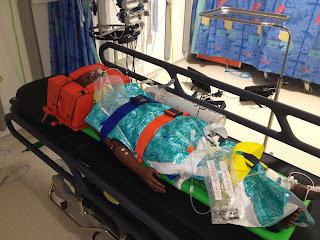
So first blog! I'm hoping to do a series of blogs on Healthcare Simulation, Patient Safety and Ergonomics and all things in between - I want this to be a place to share thoughts, ideas and learn (me learn as well!). I also don't want these to become overly academic - I will share and mention others peoples work but will not formally reference these. I wanted to start with What is Simulation as this seems an important starting point to allow further exploration later - without a common mental model or reference point it becomes more difficult. So the aim of this blog is to challenge and expand what people consider healthcare simulation to be (or what it isn't), David Gaba has pointed out that Simulation is a technique not a technology - indeed it is an educational modality. For me healthcare simulation is all encompassing it is any patient focussed learning event where we simulated the process, patient, system, event for the acquisition of skills, knowledge and or ...